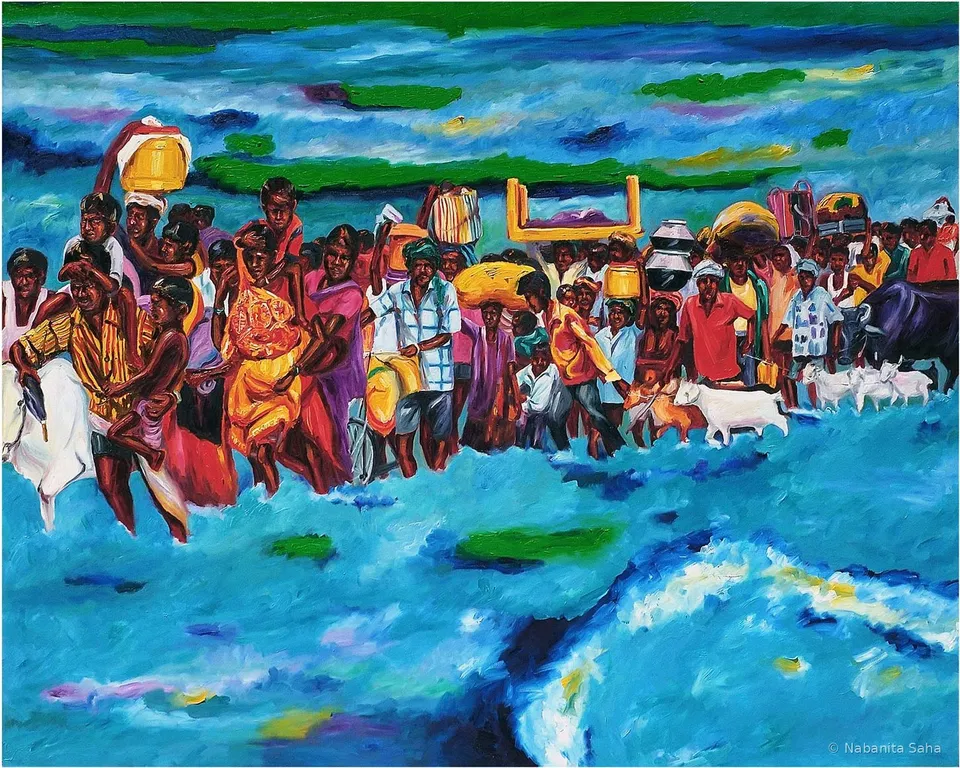
Cycles
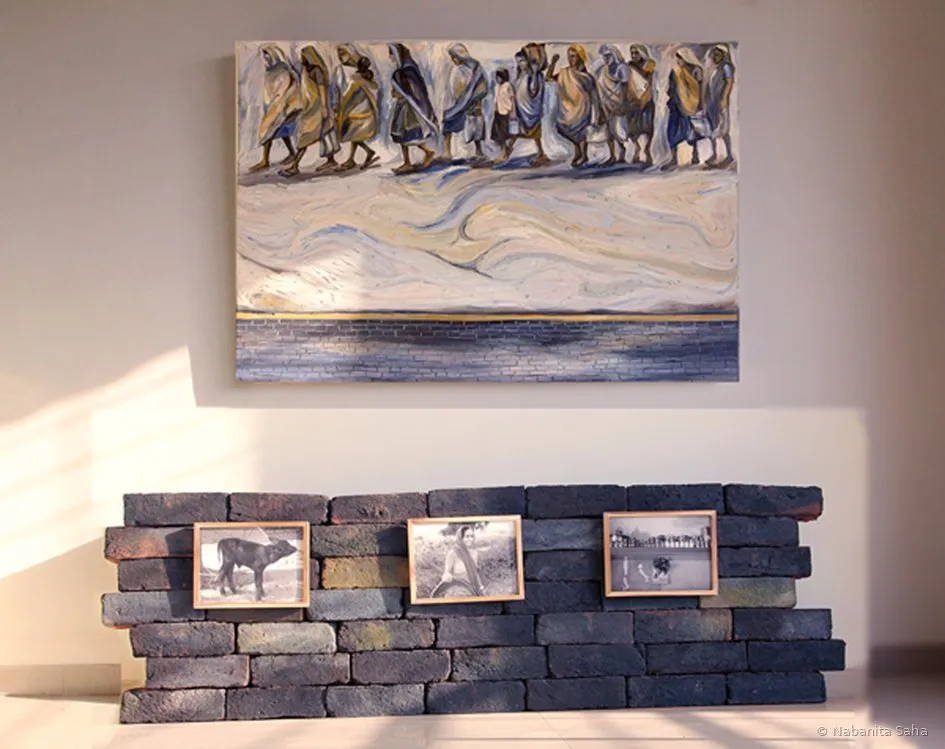
2008–2026During my college days in Kolkata I often visited the Sunderbans on study tours, to sketch and interact with the villagers living there. These villagers were from poor families, but they always shared their food with us — meals of cucumbers grown on their own fields, with rice reserved for what little they could earn. Those moments were both disturbing and humbling. As a helpless student then, I took a pledge that when I became an artist, I would work for their cause and pay back their humble offering through my creations.
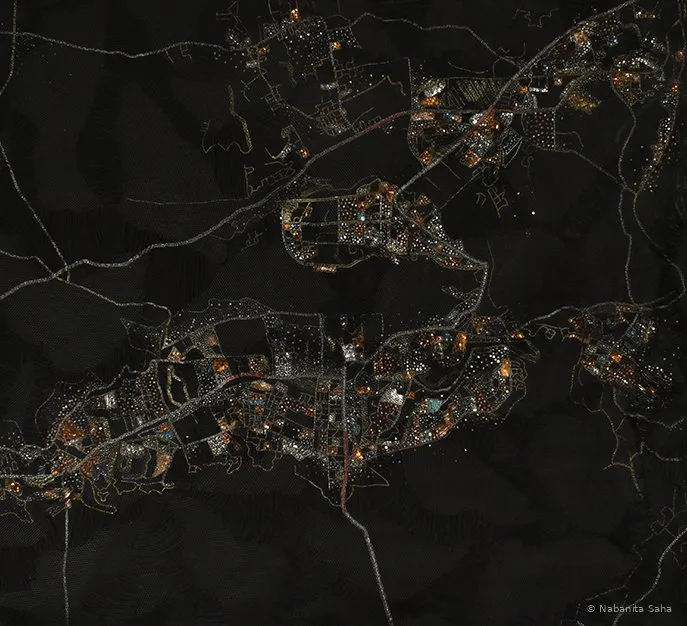
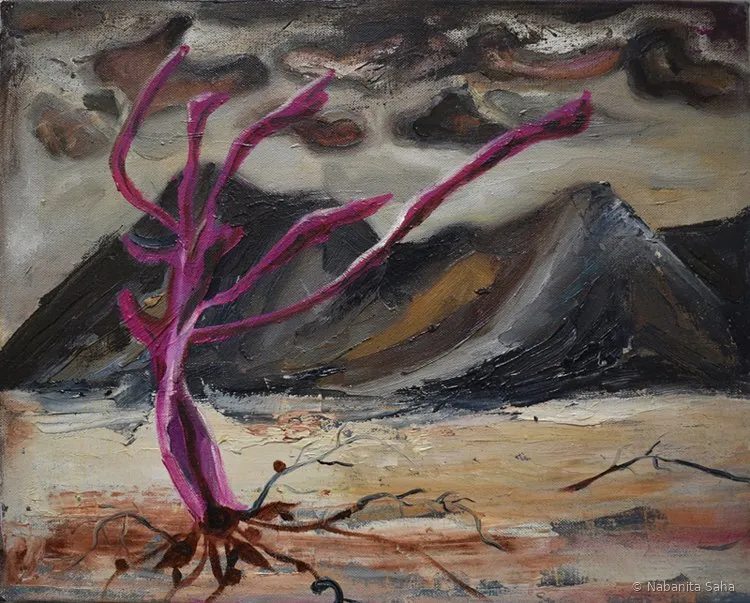
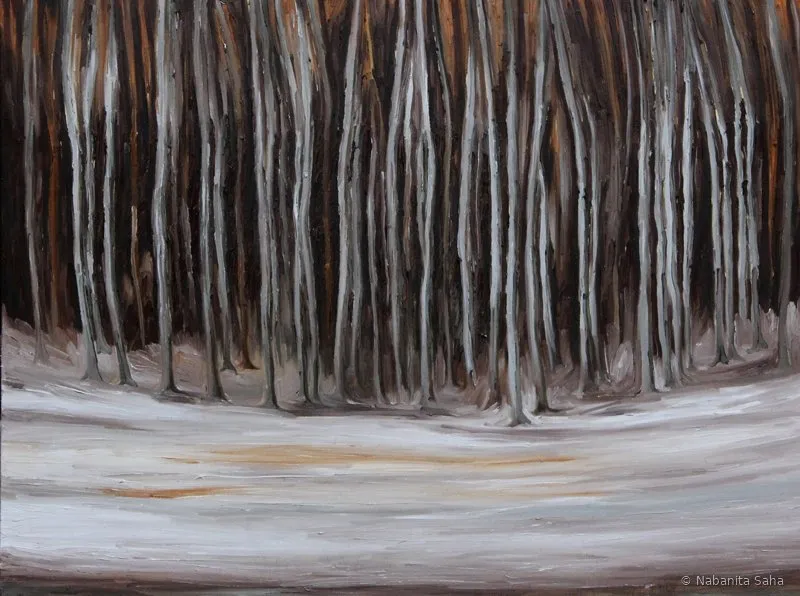
My work has since followed the trajectory of contemporary India — its transition from a national developmental model into a more global and liberal state, set against the backdrop of rural communities losing their innocence and their culture. I have worked through cycles on deforestation, water conservation, and environmental degradation, and I have come to see potable water as the major crisis facing India and the world. This concern, combined with deforestation and global warming, has become the foundation of my practice. I believe this is a greater threat than terrorism, and yet our focus rarely turns toward it. My aim is to draw attention through painting.
Technically, I have integrated the Indian miniature tradition with Western expressionism, working with gloomy, melancholic and monochrome palettes to evolve a language of my own — an integration that mirrors the way our cultures themselves are now being integrated.