
Depleted Ecosystem
When I step out of my home and into the world, I step into a concrete jungle. The paradox of life is that the word “jungle” has lost its meaning. Where are the flora and fauna that are the basic components of a real jungle? Over the decades of my life in India, I have watched the ecosystem change from a once-sublime state to one of alarming degradation. This is known to every citizen of this country, yet most of us simply shut our minds and procrastinate. When confronted with these changes, we blame the government, builders, industries, developmental authorities — every other person known to us.
I am deeply disturbed by these irreversible changes. Back in 2009 I began my own journey, to contribute in whatever small way I can to the work of reversing the depleting ecosystem and restoring it to a more sublime state. This has become the central purpose of my life. In the years since, I have travelled across India — especially Western and Northern India, and my home state of West Bengal — to capture the struggle of ordinary people and of the flora and fauna meeting these new challenges.
In 2016, India was reeling under severe drought; on average, more than 77% of the country’s potable water bodies had dried out. Groundwater levels in most cities had fallen threefold, and satellite images showed groundwater across India depleting at a rapid pace. It is an irony that the earth is composed of 77% water, yet only 1% is potable, and India sits at the receiving end. Even a good monsoon could not improve our situation. Who is really to blame? I believe our biggest challenge today is not poverty, terrorism or corruption. Our biggest challenge is the revival of our ecosystem.
So many changes have happened in the Indian ecosystem in recent decades. Several rivers have died — yet the death of a river is not acknowledged in Indian society, so it goes unnoticed by media and the general public. After all, we Indians tend to react only to what is shown to us. Several species — sparrows, vultures, common birds like cuckoo and parrots — have simply vanished from our cities. Many of us once went to enjoy the ecosystem during our holidays; even that has become a distant dream, as tourism itself is now harming what little remains.
Enough has been said about preservation, reforestation, groundwater harvesting and the conservation of the ecosystem. But what is the ground reality? We keep passing the responsibility to the next generation. We have grown deeply concerned about cigarette smoking and have creatively informed users of its harmful effects. I wonder — had we shown the same creativity in preserving the ecosystem, our sisters in rural villages could have been spared from spending twelve hours a day collecting water. It is a fact that many families in rural and urban India spend almost their entire day on water collection, living with this harsh reality. Children are losing their right to education; their childhoods are spent in this life-saving work. The same goes for the women of the household. I believe this situation will have a perilous effect on Indian society in the years to come.
Why are we so ignorant and insensitive? The facts are known to all, and so are the remedies. Why do we choose not to respond? We can have debates and discussions, but we need to act fast. Indian society must open its eyes. We cannot close our minds and run for individual solutions — as I did, by installing a spare water tank for my apartment. We need a holistic solution, where each one of us voluntarily contributes and makes an effort to bring the ecosystem to the state of sublimity I once relished, and still cherish.
Charity begins at home. My artistic responsibility has encouraged me to work for this cause, and I am passionate about bringing change through my work. Whatever small influence I can make will, I am sure, bring change — and this drop, joined by many others from our fellow brethren, can make our ecosystem sublime, and worth living in again.
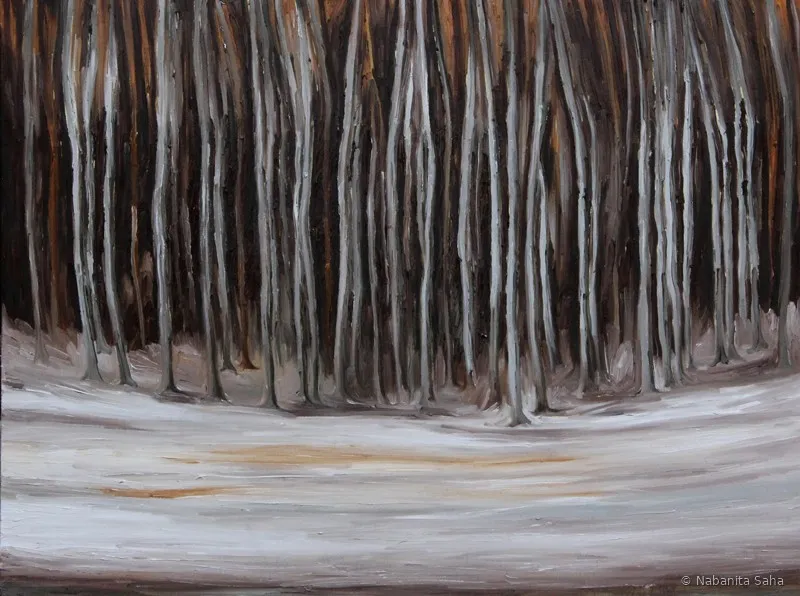
Bonded in Grief IV · 2016
Oil on canvas · 82 × 107 cm
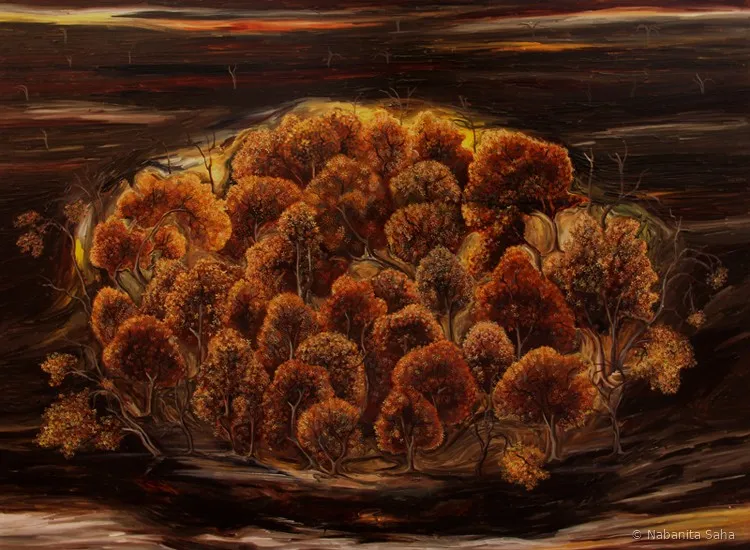
Evanescing Identity · 2016
Oil on canvas · 137 × 168 cm
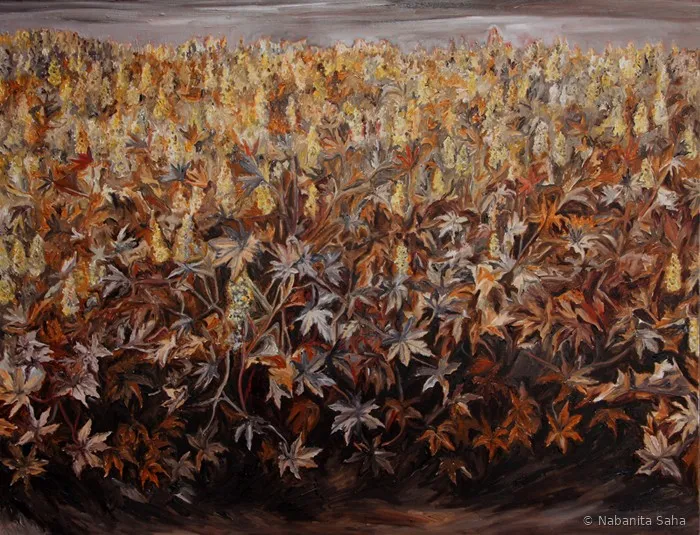
Identity Crisis · 2016
Oil on canvas · 82 × 107 cm
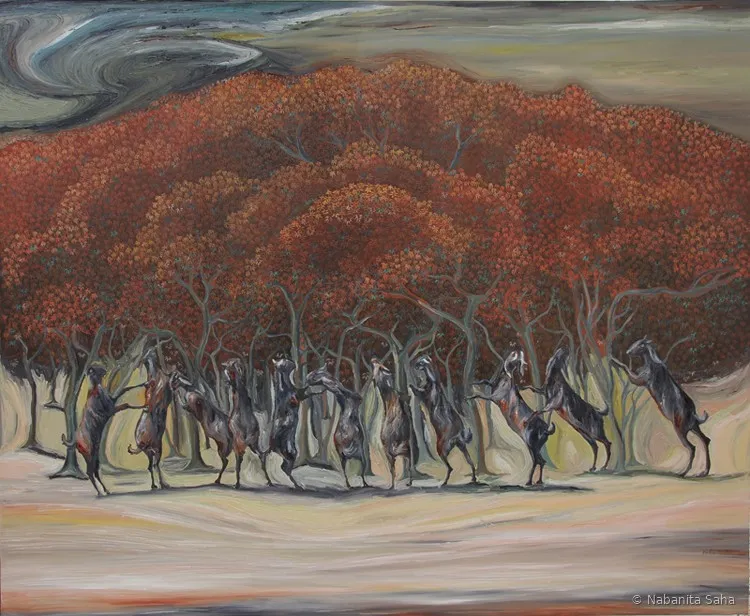
Unprolific Ambiance · 2016
Oil on canvas · 137 × 168 cm